For most of my now lengthy career, I’ve worked with models — on set, on location, with small, intimate crews and large commercial productions.
Over time, the real muscle you develop is that of a director. What I would call a form of model whispering. It’s a highly tuned skill, and one I’ve relied on to make images that hold.
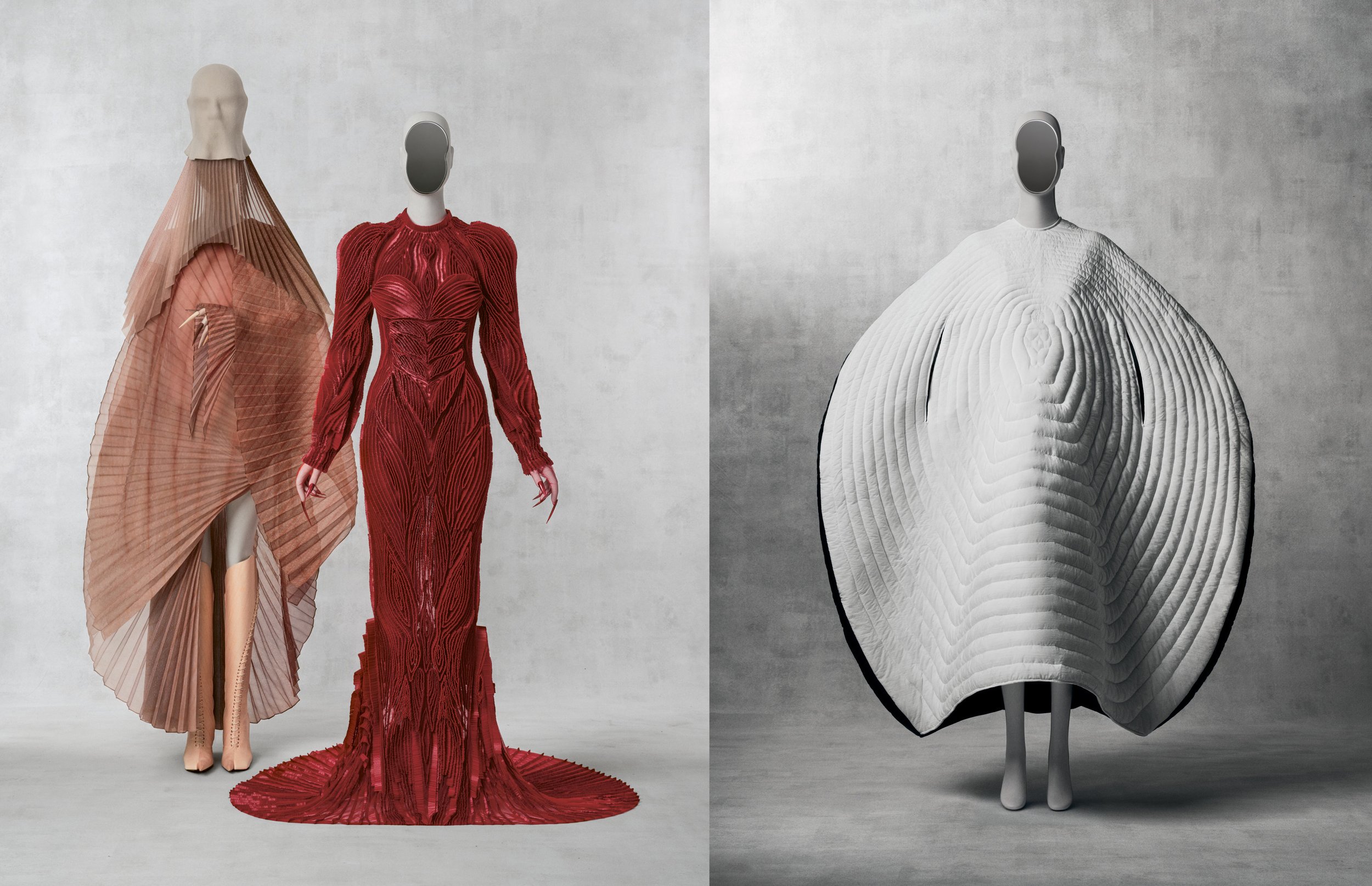
On this assignment for the Costume Institute at the Metropolitan Museum of Art, I was asked to photograph around 150 looks — garments spanning from the 18th century through to the Paris runways of 2025. A dream, in many respects.
The difference was my models.
They were all mannequins, incredible bespoke mannequins. They didn’t respond, didn’t interpret, didn’t bring anything of their own. No instinct, no gesture, no surprise. They didn’t move unless they were physically moved. They were dressed by the Museum’s primary dresser, Joyce Fung, and positioned on set by art handler Hector Serna. Every adjustment — posture, angle, the fall of a sleeve — had to be considered, corrected, refined. We worked the image into place, incrementally, until it held.
Each frame was then presented to Andrew Bolton for approval. Andrew had dreamed this project into being and every frame was just as important as the next.
The process was exacting. Without the presence of a living subject, everything had to be constructed — not artificially, but precisely. The sensitivity normally drawn from a person had to be found elsewhere: in proportion, in balance, in the tension between garment and form.
The lighting and set were mine, developed in close collaboration with Nathalie Agussol — PAN — my longstanding partner in all things photographic. Together we shaped the conditions for the image to exist.
This is how the work arrives at that level of resolution. It may appear effortless, but it is anything but. It is built, piece by piece, until there is nothing left to adjust.
And when that happens, the photograph is complete.